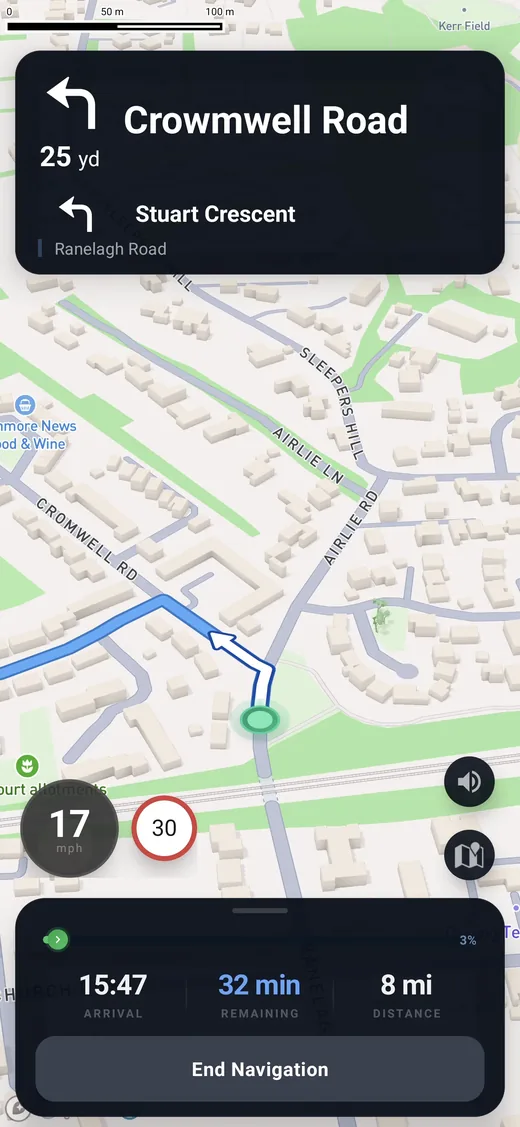

Steep hills
Rehearse observation, signalling and lane choice before the pressure point around Woolwich Road.
Build familiarity with Woolwich Road, Yarnton Way and Picardy Manorway and the wider London, Greater London road mix. This guide combines local practice priorities, current centre details and the latest available DVSA pass-rate context.
Use recorded route patterns to practise decision-making across the local road network rather than trying to memorise a guaranteed test route.
These roads are useful local practice references gathered from publicly available route guides and area research. They are not official DVSA routes and an examiner can vary the drive.
Rehearse observation, signalling and lane choice before the pressure point around Woolwich Road.
Use Picardy Manorway to practise reading signs early and settling your speed before the junction.
Expect the traffic picture to change quickly between Nuxley Road and nearby quieter streets.
Repeat the area at different times so you can respond to traffic rather than memorising a sequence.
Belvedere combines dense south-east London driving. Useful roads to recognise include Woolwich Road, Yarnton Way and Picardy Manorway. Practise the approaches from more than one direction so your lane choice comes from signs and markings, not from remembering a single turn sequence.
Build specific sessions around steep hills, busy industrial roads and pedestrian crossings. On every approach, reduce the workload early: check mirrors, read the road layout, choose a safe speed and leave enough space to correct calmly if traffic changes.
Quieter sections near Nuxley Road and Bronze Age Way are useful for polishing clearance, meeting traffic, moving away and accurate observations. Then reconnect them to the busier roads so the drive includes realistic transitions rather than isolated drills.
This is historical centre-level context, not a difficulty score. Candidate readiness, test conditions and the mix of tests taken all affect the figure.
Your first route is available free for 24 hours. Continue with weekly access from £7.99 or monthly access from £14.99 in the app. Both paid plans include Calm Coach supportive pre-drive guidance (Beta).
Prices and availability shown on the website can change. Confirm the current offer in Google Play before purchase.
Useful roads to recognise include Woolwich Road, Yarnton Way, Picardy Manorway and Bostall Hill. These are local practice references, not a published or guaranteed DVSA test route.
DVSA data for April 2025 to March 2026 records a 40.5% car practical test pass rate at Belvedere. The Great Britain rate was about 50.0% in the same annual table. Pass rates describe previous candidates and do not predict an individual result.
RouteReady currently lists 15 recorded practice routes for the Belvedere area. Availability can change as route coverage is reviewed.
Common local practice themes include steep hills, busy industrial roads and pedestrian crossings. Build consistency across these road types rather than trying to memorise one sequence.
No. DVSA states that driving test routes are not published. RouteReady is an independent practice tool using recorded local route patterns and is not affiliated with DVSA.
RouteReady can reroute you so the session can continue. Treat every practice drive as normal road driving, follow signs and road markings, and only use the app when it is safely mounted and supervised where required.
Start with one free route, then build confidence across the wider local road mix.